Winter is truffle season, and no ski resort eats it better than Courchevel. From December to March the black winter truffle — Tuber melanosporum — is shaved over dishes across the resort's Michelin tables, the most decorated dining scene in the Alps. Here is what is in season, what it costs, and where to order it in Courchevel 1850.
The great French winter truffle does not grow in the Savoie — it comes up from the oak country of Provence and the Périgord. But Courchevel is where it is eaten at the highest level, because the truffle's best months, December to March, are exactly the ski season, and the resort carries more Michelin stars than anywhere else in the Alps. Here is the season, the price and the table.
What is in season, and when
“Truffle” is really four different mushrooms with four different calendars. The one the great winter menus are built on is the black Tuber melanosporum; the Italian Alba white is the rarer, pricier autumn star.
| Truffle | Season | Where it is from | Rough price |
|---|---|---|---|
| Black winter (Tuber melanosporum) | December–March | Provence, Périgord, Quercy | €800–€1,500/kg |
| Alba white (Tuber magnatum) | October–December | Piedmont, Italy | €2,000–€5,000+/kg |
| Burgundy (Tuber uncinatum) | September–December | across France | far more modest |
| Summer black (Tuber aestivum) | May–August | France & Italy | the most affordable |
A black diamond — and how it is cooked
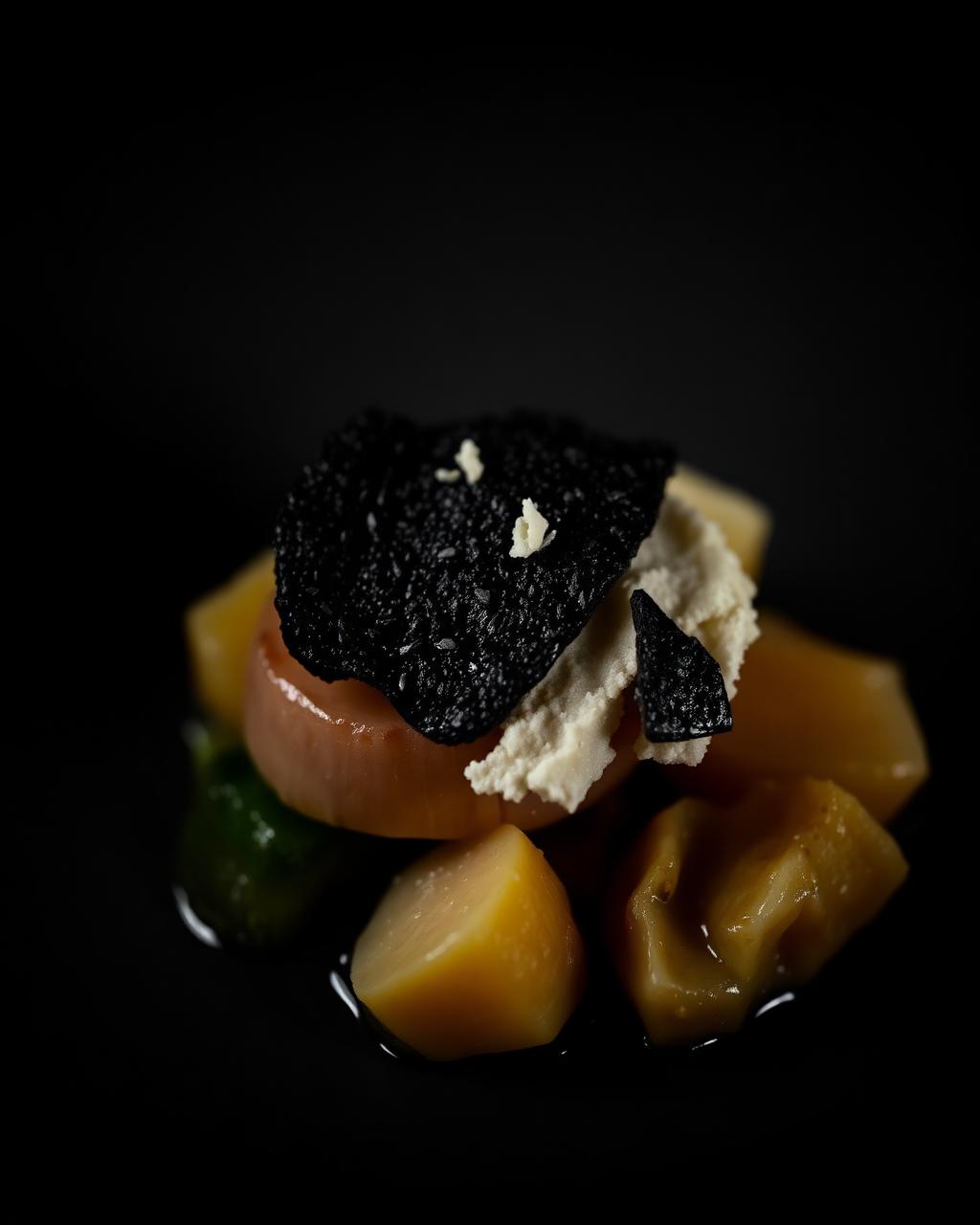
Fresh black truffle smells of forest floor, damp stone and something almost meaty — an aroma so volatile that a chef shaves it at the last second, over heat, to set it free. Unlike the raw-shaved Alba white, the black winter truffle is warmed, which is why the classic ways to serve it are humble on purpose: a soft egg left overnight in a jar with a truffle, buttered pasta or risotto, a baked potato, a wedge of ripe Brie or Vacherin. The most expensive ingredient in the kitchen is at its best on the plainest plate, where nothing competes with the scent. Courchevel's three-star kitchens build it into far more elaborate dishes — Yannick Alléno is known for extracting and concentrating its aroma into sauces — but every great truffle course is, underneath, a frame for that smell.
Where to eat truffle in Courchevel 1850
Courchevel 1850 holds the densest cluster of Michelin stars in the Alps, and in season the truffle runs through most of them. At three-star Le 1947, Yannick Alléno builds tasting courses around it. At two-star Le Sarkara in the K2 Palace, Sébastien Vauxion folds it into the world's only all-dessert starred menu — improbable, and one of the most requested seats of the winter. The one-star Le Chabichou, a Savoie-rooted institution, and Baumanière 1850 at Le Strato, all Provençal precision, both shave it tableside. Even the mountain restaurants you ski to at lunch put it on the menu when it is in.
Why it costs what it costs
Truffles cannot be grown to order. They form wild on the roots of oak and hazel and are sniffed out by trained dogs — pigs, in the old days — so supply swings with the weather and the price moves week to week. Fresh black winter truffle trades at roughly €800 to €1,500 a kilogram in a normal year, and more for top “extra” grade. The wholesale price is set every Saturday at the Richerenches market in the Vaucluse — the self-styled capital of the truffle, where the trade still happens from the boot of a car — and the best kitchens buy as close to the source as they can. From the Provençal markets the truffles travel north and reach Courchevel tables within a day or two. On a menu the truffle is almost always a supplement: weighed whole, shaved at the table, and weighed again, so you pay for exactly what lands on the plate.
When to come for it
The black winter truffle overlaps almost perfectly with the ski season. It appears from December, deepens through the coldest weeks of January and February — the same weeks the snow is at its best and room rates dip between the holiday peaks — and tails off in March. For a truffle-led trip, mid-January to late February is the sweet spot: the mushroom at its most intense, the resort at its quietest, and every starred kitchen running its winter menu.
Read on
Plan a winter around the table with our guide to Courchevel's Michelin restaurants and the best restaurants in Courchevel 1850, or check when to go.