Heli-skiing has been illegal in France for decades, on environmental grounds — one of the very few European countries to outlaw it outright. Italy, twenty minutes away by air, has no such rule. The result is a long-standing Courchevel itinerary: fly from the altiport, land on an Italian glacier, and ski down the far side of the border.
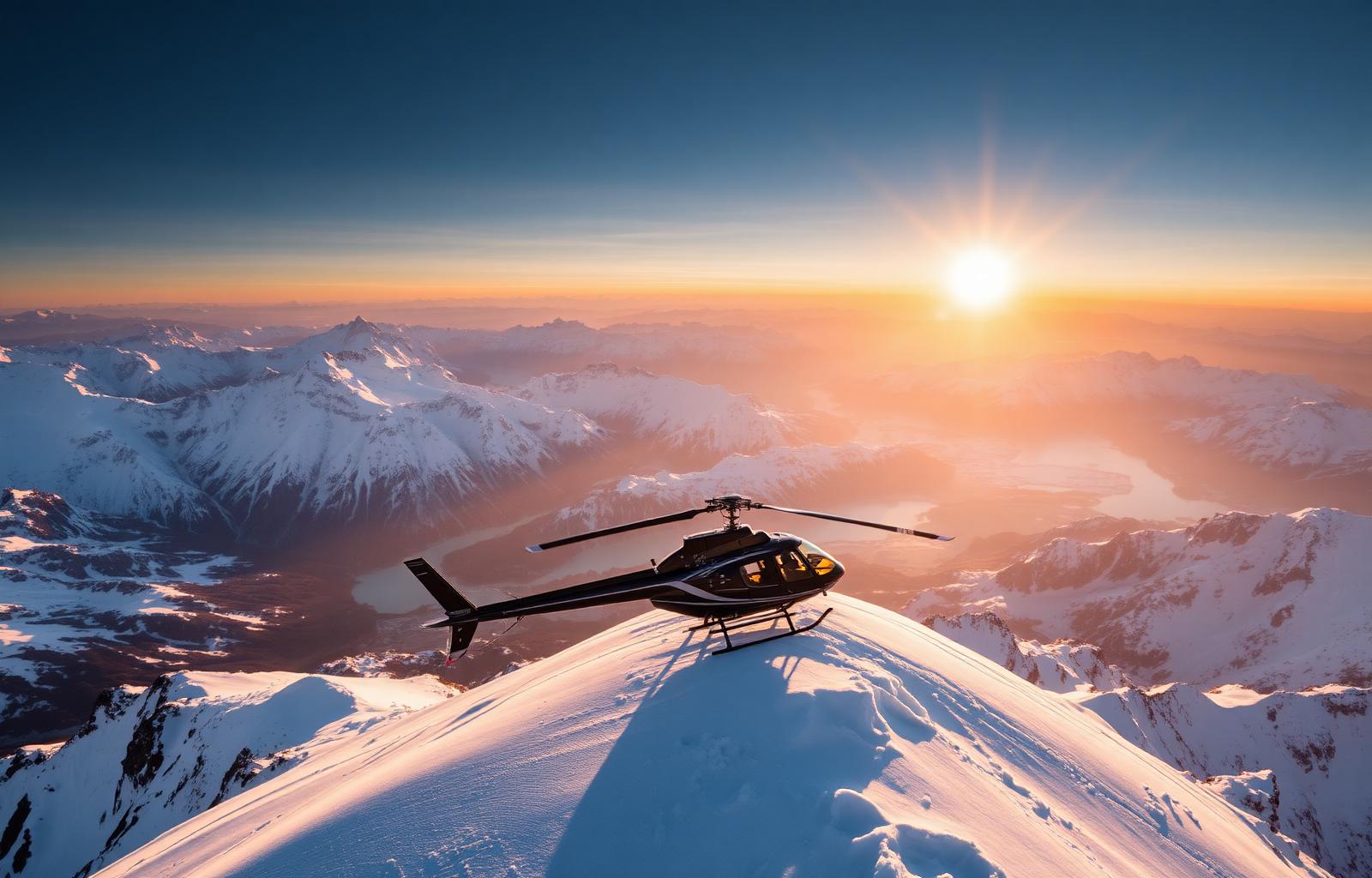
You cannot heli-ski in France — dropping skiers by helicopter for sport is banned nationwide. But the Italian border is only minutes away by air, and Italy allows it, so the classic Courchevel adventure is a cross-border one: a helicopter lifts you from the Courchevel Altiport, sets down on the Ruitor glacier above La Thuile in the Aosta Valley, and you ski the Italian side back down. It is legal precisely because the landing happens on Italian soil, and it runs only when the weather and avalanche conditions allow. Here is how the day works.
The cross-border heli-ski day at a glance
| Stage | What happens |
|---|---|
| Departure | A helicopter (an AS350 Écureuil B3) lifts off from the Courchevel Altiport, mid-morning |
| The flight | Roughly 20–45 minutes east to the Ruitor glacier, above La Thuile in Italy’s Aosta Valley |
| The drop | Landing on a snow shelf near 3,400–3,500 m, with a UIAGM mountain guide |
| The descent | A long glacier run — well over a thousand vertical metres — down the Italian side |
| Lunch | A mountain restaurant above La Thuile: polenta, fontina, a glass of Aosta red |
| Home | Helicopter back to the Courchevel Altiport by mid-afternoon |
Why it has to be Italy
France banned the dépose — dropping skiers by helicopter onto the mountains for leisure — under the 1985 loi montagne, and has kept the ban ever since; it is one of the only Alpine nations to do so. You can still take a scenic flight or a mountaineering lift, but you cannot be flown up simply to ski down. Italy draws the line differently, and the Aosta Valley just over the border has a well-established heli-ski operation. Because Courchevel’s own altiport is licensed for take-off and landing, the round trip — French departure, Italian descent, French return — stays entirely legal.
The Ruitor glacier
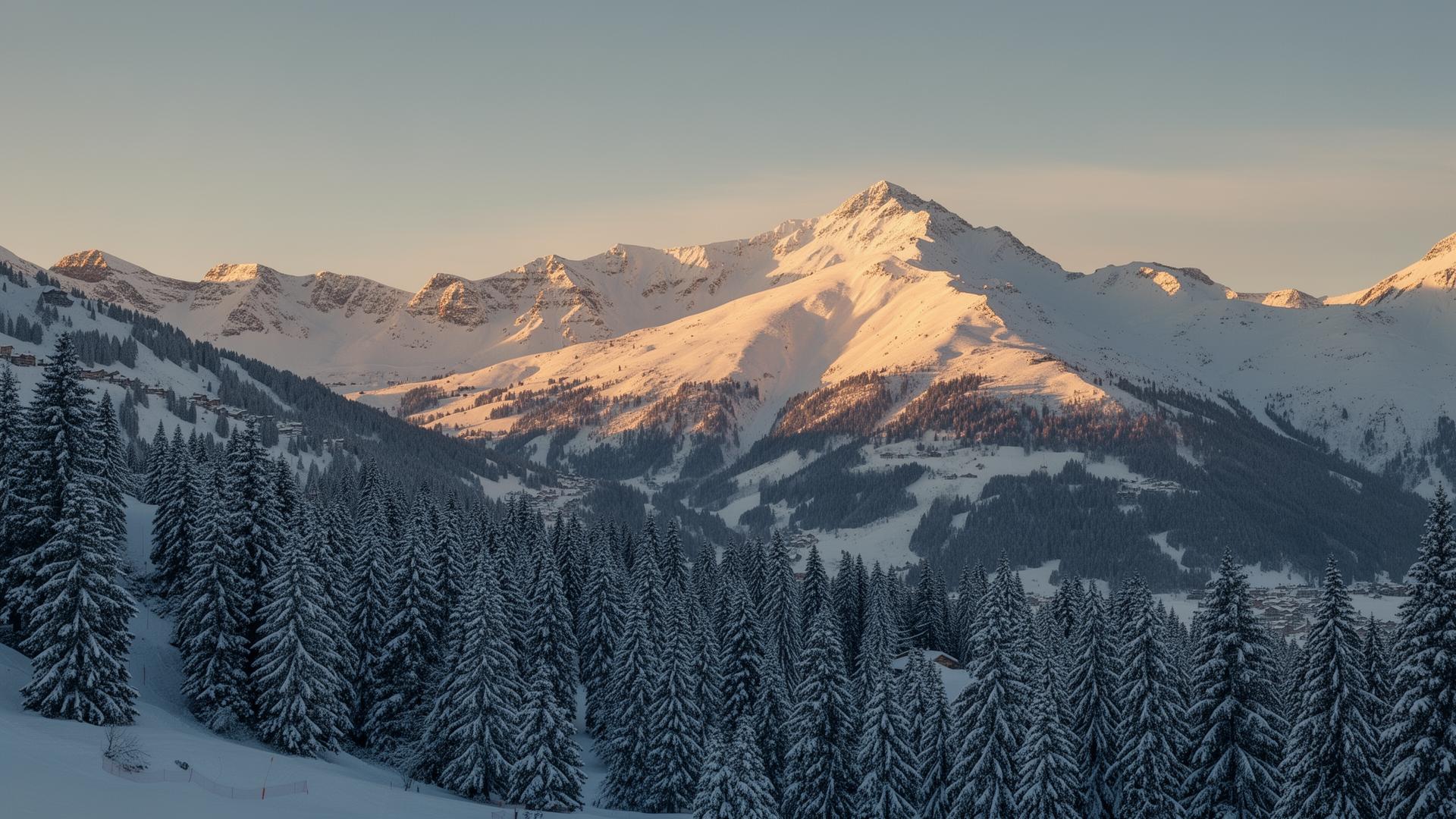
The destination is the Ruitor (Rutor) glacier, a broad icefield of around 900 hectares rising to some 3,480 metres on the Italian side, with the whole Mont Blanc chain on the horizon. Its upper slopes are wide and gently angled — forgiving enough that a strong intermediate can find a rhythm at altitude — while the lower sections steepen into the powder gullies that draw expert skiers back winter after winter. Crevasses are mapped and given a wide berth; a qualified guide leads every group, which is not optional and not negotiable.
Lunch on the Italian side
Most days end down in La Thuile, where the tradition is a long Italian mountain lunch before the flight home — polenta with fontina, cured meats, a truffle if the season is right, and a glass of the local Aosta red. It is a deliberately unhurried hour or two; the helicopter is not going anywhere until the group is ready, and the point of the day is as much the border-crossing theatre as the vertical.
What it costs and when it runs
This is a private-charter day, and it is priced like one: expect a four-figure sum for a small group, varying with the operator, the aircraft and the number of flights. Book several days ahead — the weather window is narrow and the slots are competitive. Two things can cancel it outright. If cloud forces the helicopter to set down in France rather than Italy, the day is off (and the deposit generally stands). And guides will stand down when the European avalanche danger scale reads high — typically at level 4 or above on the 1–5 scale. In a difficult winter the glacier may deliver only a handful of flyable days; in a good one, dozens.
Plan the rest of your stay
The glacier run is the far end of Courchevel’s off-piste spectrum. For terrain closer to home, read mapping the off-piste secrets of the resort; to plan your arrival, see how to get to Courchevel 1850; and browse the rest of the mountain in things to do.