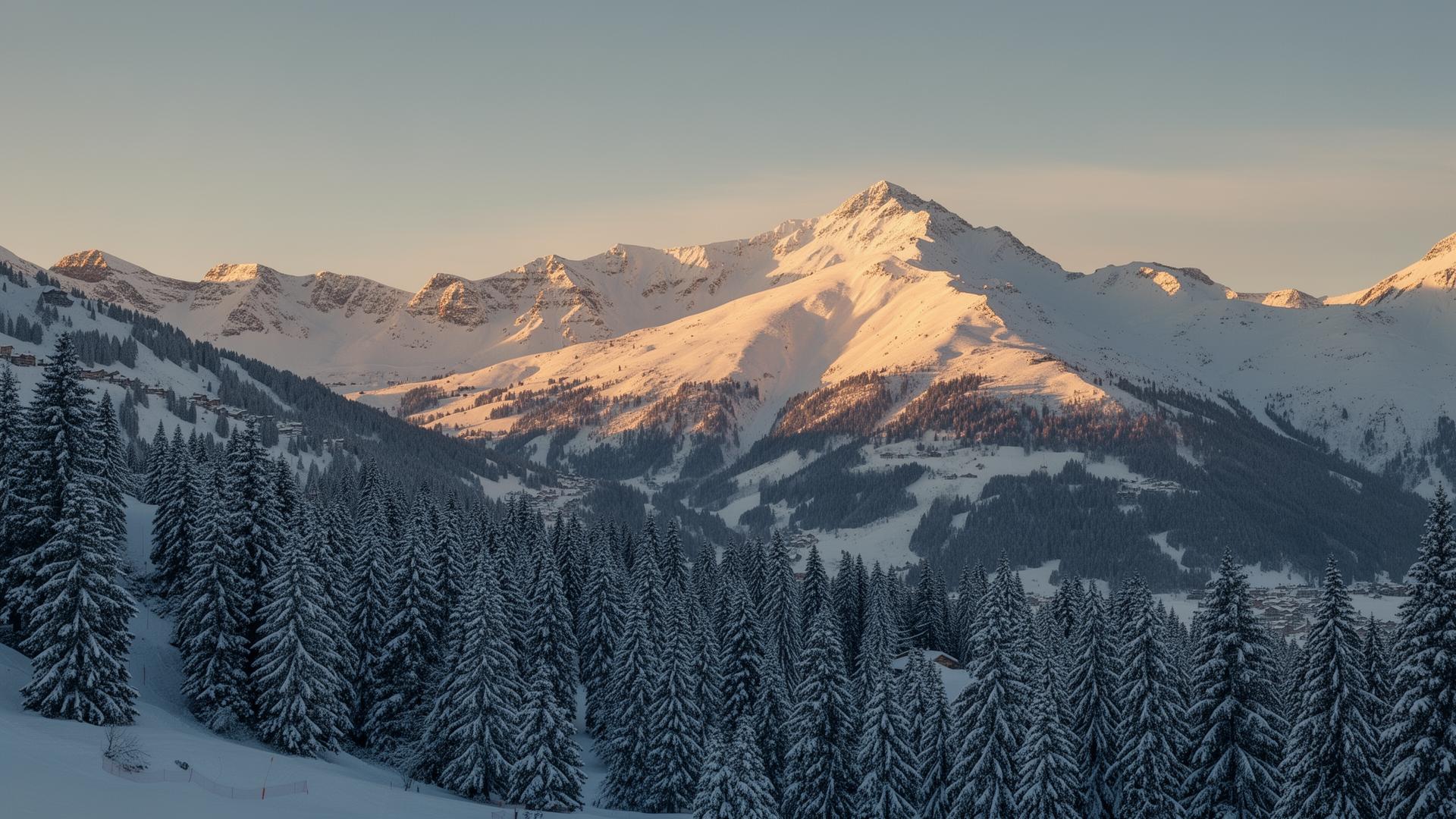
Courchevel's lift system reaches some of the most storied off-piste in the Alps — the knife-edge of the Grand Couloir, the powder bowl of the Creux Noirs, the long empty Vallée des Avals. Every metre of it is unpatrolled avalanche terrain. Here are the lines that define Courchevel's off-piste, and the guide, training and kit without which none of them should be attempted.
Courchevel opens onto terrain that skiers cross continents to ski: couloirs off the Saulire ridge, the wide north-east bowl of the Creux Noirs, a wild valley you reach from a chairlift, and true ski-touring descents into the edge of the Vanoise National Park. None of it is groomed, marked, patrolled or checked for avalanche release. This is a guide to the lines that define Courchevel's off-piste — and, just as importantly, to the guide, the training and the safety kit that make skiing them a sport rather than a gamble.
Courchevel's off-piste at a glance
| Line | Access | Drop | Character |
|---|---|---|---|
| Grand Couloir | Saulire cable car + ridge path | ~500 m | Marked black, ungroomed — the gateway |
| Petit Couloir / Croix des Verdons | Short hikes off the Saulire ridge | Steep | True off-piste couloirs beside the Grand |
| Creux Noirs | 15-min hike from Pas du Lac | ~600 m | 40–45°, north-east — the powder classic |
| Vallée des Avals | Traverse from Col de Chanrossa | ~700–800 m | Wild valley, mellower — a first big off-piste |
| Roc Merlet, NW face | 15–20-min climb from Chanrossa | ~600 m | ~25°, gentle — the beginner's off-piste |
| Rocher de la Loze, N face | 45-min climb | ~300 m | 40–45°, blind entry — expert only |
| Aiguille du Fruit, N couloir | 1½–2 h ski tour | ~800 m | 40–45° couloir under the highest peak |
| Col du Fruit | ~3½ h ski tour (Verdons/Vizelle) | — | Touring to the Vanoise park boundary |
First, the part that is not optional
None of the lines below is a “run.” They are not patrolled, not marked, not checked for avalanche release and not swept at the end of the day. Skiing them safely rests on three things, in order: a qualified mountain guide or ESF off-piste instructor who has read the day's snowpack; the avalanche safety trio — transceiver, shovel and probe — worn, not packed, and practised with; and the day's avalanche bulletin (the BERA for the Vanoise massif, published each afternoon by Météo-France). Off-piste is legal in France and you may ski it without a guide — but every winter the Trois Vallées loses people who did. The single best decision on this page is to book a guide for your first descent of any of these lines.
The lift-accessed classics
The Grand Couloir
The most famous line in Courchevel is, strictly, a marked run. From the top of the Saulire cable car a narrow, exposed path traverses out along the ridge to the mouth of the Grand Couloir — routinely billed as one of the steepest black pistes in the Alps. It is patrolled and on the map, but ungroomed, often heavily mogulled and genuinely serious, and it is the gateway to everything around it. The real off-piste begins at its shoulders: the Petit Couloir and the Croix des Verdons couloir, reached by short hikes from the same ridge, are tighter, unpatrolled and a clear step up in commitment.
The Creux Noirs
A fifteen-minute hike from the top of the Pas du Lac gondola, toward La Petite Saulire, opens the Creux Noirs — the resort's great north-east bowl, around 600 vertical metres of open snow with pitches between 40 and 45 degrees. It holds cold, dry powder for days after a storm and offers endless variations, several of which finish in couloirs and rock bands. It is the classic Courchevel powder objective for strong skiers — and, on the wrong day, classic avalanche terrain.
The wild valley — the Vallée des Avals
For a first taste of big off-piste, nothing in Courchevel beats the Vallée des Avals. From the Col de Chanrossa a short traverse under the face of Roc Merlet drops you into a long, empty valley — 700 to 800 vertical metres of playful, mostly mellow snow, around 40 degrees at its steepest, that leaves the lifts and the crowds entirely behind. The reward is solitude and clean snow; the catch is a long, flat cross-country trail back to the pistes at the end, which is exactly why a guide who knows the exit line earns their fee. It is wilderness skiing reached from a chairlift.
The gentle line, and the experts' lines
Not all off-piste is steep. The north-west face of Roc Merlet, a 15-to-20-minute climb from the Col de Chanrossa, is a flowing 600-metre descent averaging only about 25 degrees — the ideal place to make your first off-piste turns with a guide, on snow that stays good because few people climb for it. At the other end sit the connoisseurs' lines: the north face of the Rocher de la Loze, 300 metres at 40–45 degrees and “completely blind” from the top, so it has to be studied from below before you commit; and the couloirs off the Saulire ridge. These are for experienced off-piste skiers, with a guide, in settled conditions only.
Earn your turns — the Aiguille du Fruit and Col du Fruit
Courchevel's finest off-piste is not lift-served at all. A ski tour — skins on, climbing under your own power — opens the wild edge of the Vanoise National Park. The north couloir of the Aiguille du Fruit (3,048 m), a 1½-to-2-hour tour from the Col de Chanrossa, drops around 800 metres, some 400 of them in a committing 40–45-degree couloir beneath the massif's highest peak — a genuine mountaineering descent. Gentler in gradient but just as wild, the tour to the Col du Fruit (2,516 m) — via the Verdons and Vizelle gondolas, then roughly 3½ hours on skins — carries you to the boundary of the national park, the Courchevel and Méribel valleys falling away on either side. Both are guided-only outings that ask for fitness, touring kit and an early start.
Hiring a guide in Courchevel
The Bureau des Guides de Courchevel, part of the Compagnie des Guides de la Vanoise, is the resort's professional guiding body; the ESF also fields off-piste instructors. A guide for the day — typically 9 a.m. to 4 p.m., for a small group — costs around €420, and that rate includes the transceiver, shovel and probe you will be wearing. Split between three or four skiers it is one of the best-value bookings of a Courchevel trip, and the only way to ski the lines above with the local knowledge that keeps you clear of the terrain traps. For guided off-piste and heli-accessed days, see our guide to off-piste & heli-skiing.
When the snow is right
Off-piste rewards patience. The north-facing lines — the Creux Noirs, Roc Merlet, the Aiguille du Fruit — hold cold powder for days after a storm and are the ones to chase in the deep weeks of January and February. South-facing slopes soften fast and are best saved for spring corn on a stable snowpack. The window that combines fresh snow, settled avalanche risk and clear visibility is narrow — and reading it is precisely the judgement a guide is paid for. Orient yourself on the piste map, and build the rest of the trip around our Courchevel ski guide.